

Artificial Intelligence is revolutionizing how diseases are detected and treated. From predicting health risks to supporting doctors with faster decisions, AI is a silent partner in saving lives.
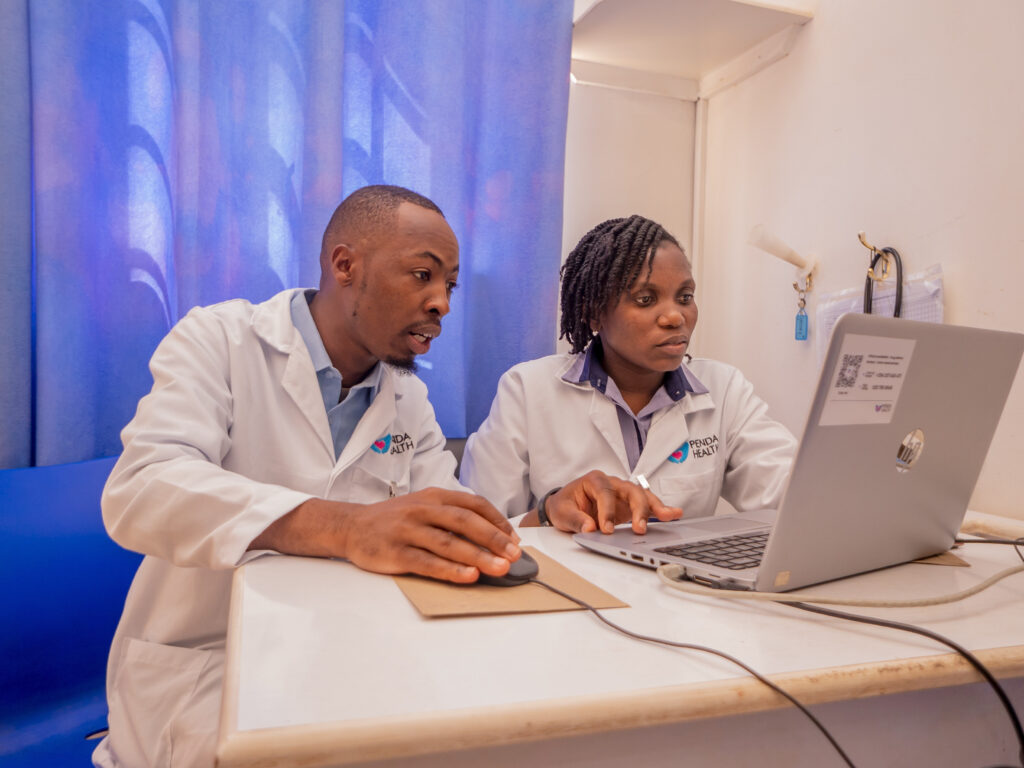
When you think “AI in healthcare,” you might recall sci-fi ideas: robots diagnosing patients or machines replacing doctors. But the reality is far more grounded and empowering. At Trimverse, we see AI as a smart assistant — working with doctors, not replacing them — helping to detect early signs of disease, streamline diagnostics, and personalise treatment.
Why AI is a game-changer:
- AI can analyse large datasets, spot patterns, and detect risk factors faster than traditional methods.
- In Africa, this means faster detection of infectious diseases, earlier interventions, improved outcomes. Case studies highlight AI‐powered tools in TB screening, predictive analytics for chronic disease care. Africa Telehealth+1
- AI empowers not just specialists in big cities, but enables smaller clinics with fewer resources to deliver smarter care.
How Trimverse uses AI:
- AI‐driven diagnostic tools to assist early disease detection (one of our core services).
- Machine learning models examining vitals, patient history, wearable data to flag anomalies.
- Structured feedback loops where clinicians review AI suggestions, refine them, and improve accuracy over time.
Bringing it to life:
Imagine a patient wearing an IoT-enabled health band. The band collects heart rate, oxygen saturation and movement patterns. The data feeds into an AI model which flags a slight change in trend. The system notifies a doctor, who reviews remotely and intervenes before the condition worsens. That’s proactive care. That’s AI + human collaboration.
Responsible implementation:
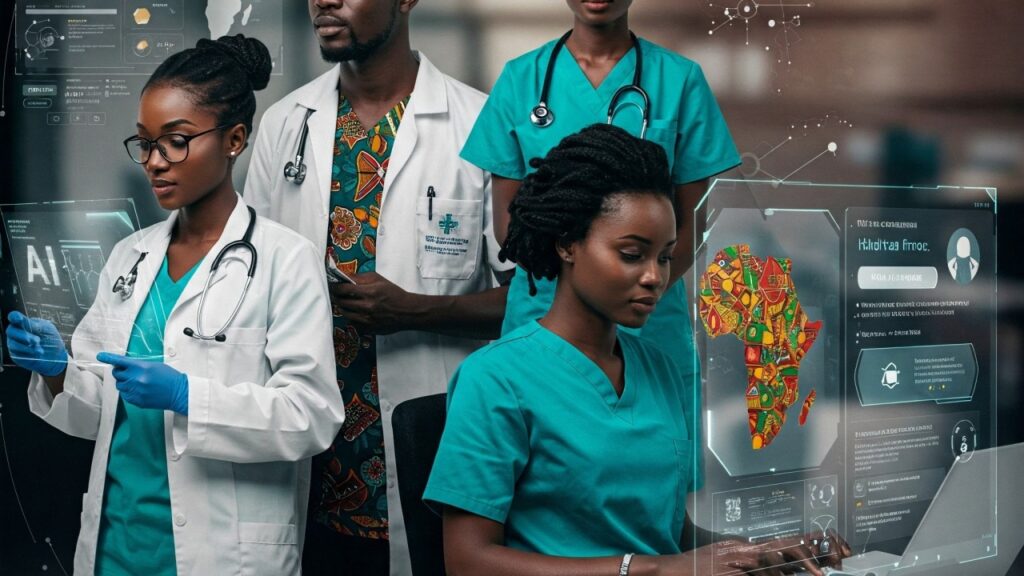
AI is powerful, but only if implemented well. Issues like data privacy, algorithm bias, local relevance matter. For example, tools trained on datasets from outside Africa may not perform as well in African contexts. Studies highlight the importance of culturally-relevant models and inclusive datasets. arXiv+1 At Trimverse, we build with the local context in mind: data from our regions, models adapted to local populations, workflows that match how clinics operate in South Sudan.
For healthcare providers & patients:
- Providers get decision-support: AI suggests likely diagnoses, flags red-flags, speeds up triage.
- Patients get faster, more personalised care, fewer unnecessary steps, better monitoring.
- Overall system becomes leaner: fewer delays, fewer missed diagnoses, less cost.
Takeaway:
Artificial Intelligence isn’t about replacing doctors. It’s about amplifying their capabilities. In places where resources are stretched, AI becomes a force-multiplier. At Trimverse, we’re excited to harness AI’s potential to bring better, faster, smarter healthcare to South Sudan and beyond.